
Shavuot
Shavuot is known as the holiday of Matan Torah, the giving of the Torah. But in the Ma’or Va-Shemesh, Torah is not presented merely as law, obligation, or even spiritual inspiration. It is presented as a path toward devekut (attachment to God), inner transformation, unity, and love.
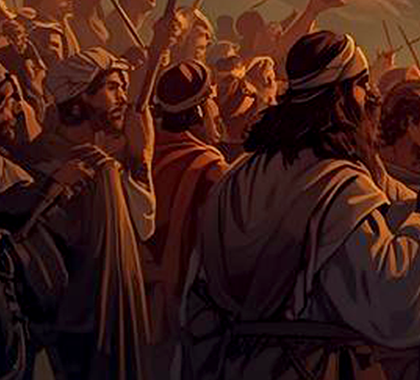
He begins with the dramatic scene at Har Sinai, where the Jewish people “saw the sounds and the torches.” At first glance, this appears to describe the height of revelation. Yet the Ma’or VaShemesh asks a striking question: if this was the ultimate spiritual experience, why were they still experiencing external phenomena at all?
His answer is radical. The ultimate goal of avodat Hashem is not spiritual experiences themselves, but attachment to God Himself. As long as a person is still captivated by visions, sounds, or spiritual manifestations, he has not yet reached the deepest level of devekut. Even genuine spiritual experiences can become distractions if one mistakes the revelation for the Source behind it.
This becomes the deeper meaning of the nisayon, the “test,” at Sinai. Would the people become attached to the kolot u’lapidim (sounds and torches), or continue beyond them toward the Divine Himself?
From there, the Ma’or VaShemesh develops a profound understanding of Torah itself. The entire Torah, he explains, is ultimately contained within “Anochi Hashem Elokecha.” The mitzvot are not merely commandments, but, as the Zohar describes them, eitzot (pathways or counsels) through which finite human beings gradually come to know and attach themselves to God.
But this raises a practical problem. No individual can fulfill the entire Torah alone. Many mitzvot belong specifically to Kohanim, Leviim, the Beit HaMikdash, Eretz Yisrael, or particular life situations.
His answer is אהבה ואחדות, ahavah v’achdut, love and unity.
When Jews become deeply connected to one another, each person becomes connected not only to the other individual, but also to the Torah, mitzvot, and spiritual work fulfilled by the other. In this sense, כלל ישראל together become the complete embodiment of Torah.
Finally, he reinterprets נעשה ונשמע, na’aseh v’nishma. The greatness of Israel was not merely obedience before understanding. Human beings often act quickly because they fear losing an opportunity. The angels, however, act immediately because love of God burns within them constantly. At Sinai, ישראל reached this angelic level. Their “נעשה” emerged not from blind obedience, but from overwhelming love and longing to fulfill the Divine Will.
Taken together, the Ma’or VaShemesh presents a vision of Torah not merely as obligation, but as a process of transformation, one through which human beings gradually move beyond fragmentation, ego, and externality toward attachment, unity, love, and ultimately toward God Himself.
Parshat Nasso
In this week’s parsha, Naso, the Ma’or Va-Shemesh develops a remarkably consistent idea across several seemingly unrelated sections of the parsha: a person is never spiritually isolated.
Our actions do not affect only ourselves. They either bring harmony into the world, or distortion into it.
In his discussion of teshuvah (repentance/return), the Ma’or VaShemesh explains that even small sins left uncorrected gradually reshape a person from within. “Aveirah goreret aveirah” (“one sin leads to another”). Using the symbolic language of Sefer Yetzirah, he describes the righteous person as bringing harmony to the foundational elements of creation, while sin disorders them. Teshuvah is not merely forgiveness. It is restoration.
But he then develops the same idea in very different ways throughout the parsha.
The Nazir is not merely someone abstaining from wine, but someone attempting to transform harshness into holiness and compassion.
The Kohen can only truly bless the Jewish people if he genuinely loves them, because blessing itself flows through ahavat Yisrael (love of one’s fellow Jew).
And Birkat Kohanim (the Priestly Blessing) ultimately culminates not with wealth or even spiritual enlightenment, but with shalom (peace), because peace is the vessel that allows blessing to endure.
Taken together, the Ma’or VaShemesh paints a profound picture of spiritual life. We are not disconnected individuals pursuing private spirituality. We shape one another. We elevate or damage the spiritual fabric around us. And true blessing emerges not only from holiness, but from connection, responsibility, and genuine care for others.
Use this source sheet for Shavuot and this source sheet for Parshat Naso, complete with footnoted sources and a concise, footnoted bio of R. Kalonymus Kalman Epstein (Ma’or Va-Shemesh) to enjoy this teaching at your own pace, perfect for self-learners.
Prepared by Rabbi Shalom (Saul) Orbach
The Ma’or Va-Shemesh is a classic Hasidic commentary on the weekly portions and festivals by R. Kalonymus Kalman Epstein of Kraków (1751-1823). A foremost later disciple, and for years the Shamash, of R. Elimelech of Lizhensk, he emerged after his rebbe’s passing as a leading figure in the fourth generation of Chassidut and of Polish Hasidism. His Torah blends close reading of the Psukim with mystical depth, emphasizing Dvekut, heartfelt prayer, joy, and sanctifying the everyday, with a hallmark leadership ethic: the tzaddik sweetens judgment into mercy and draws people close.