
TO APPLY PLEASE CLICK HERE.
SURVEY COURSES
The purpose of these two required survey courses is to introduce learners to the leading Medieval and Modern Jewish thinkers, while surveying the major issues in Jewish thought which they dealt with in their times and briefly exploring why they thought the way they did and how they differed from one another. Each Survey Course will last 24 weeks, with each weekly lesson lasting an hour.
Medieval Jewish Thinkers Survey Course
Taught by Rabbi Dr. Mark Smilowitz – STARTS October 2026
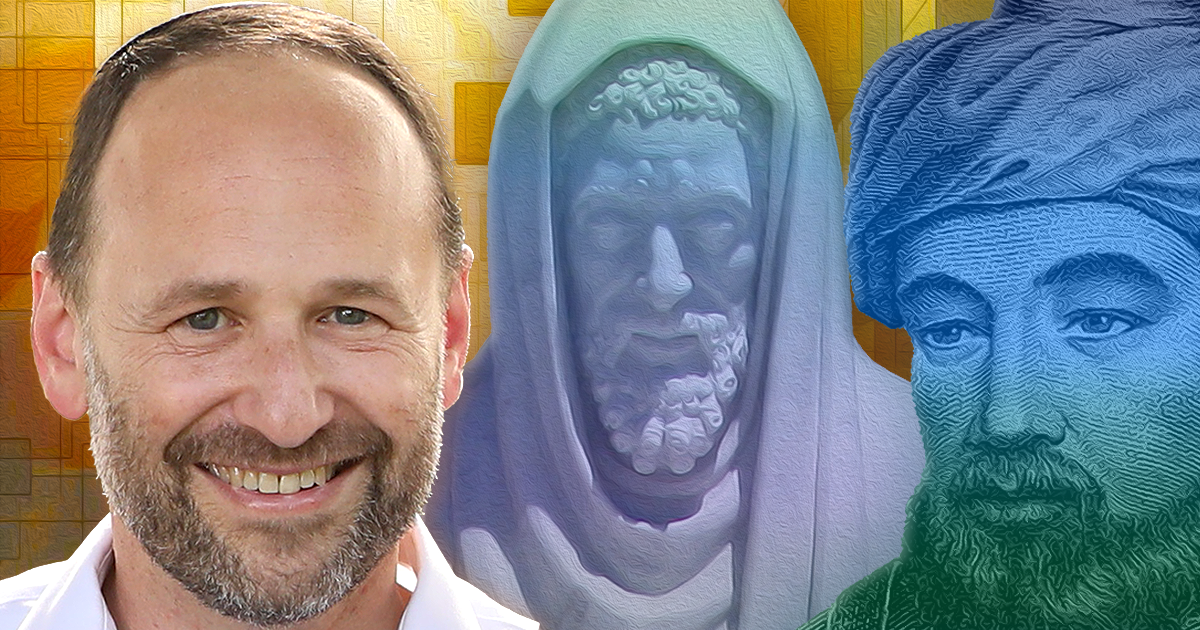 The course will explore some of the forces that formed the various philosophical works of this era, which include pressure to assimilate coming from the majority culture of Christianity or Islam, as well as confusion among the masses about Jewish belief that arose from interaction with Karaites and both secular and Islamic Aristotelian rationalism. Topics of interest include the question of proving God’s existence, the rationality of the commandments, the nature of prophecy, the immortality of the soul, and others. Differences between Rambam’s and Harav Yehuda Halevi will be emphasized, and other thinkers explored will include Rav Saadyah Gaon, Rabbeinu Bahya, Ralbag, Rav Hasdai Crescas, Rav Yosef Albo, and others.
Modern Jewish Thinkers Survey Course
Taught by Rabbi Jeffrey Saks – STARTS October 2027
 This course will examine the thought of rabbinic figures such as the Maharal of Prague, R. Nachman Krochmal, Moses Mendelssohn, R. Ḥayim of Volozhin, R. Samson Raphael Hirsch, R. Joseph B. Soloveitchik, and R. Abraham Isaac Kook, alongside challenges and contributions offered by some non-rabbinic Jewish philosophers like Benedict Spinoza, Hermann Cohen, Franz Rosenzweig, and Emmanuel Levinas. Central themes include the tension between autonomy and authority, the challenge of modern individualism, the rise of historicism, the influence of existentialism, and the impact of the Enlightenment on Jewish thought and identity. The individuals and topics shall be studied with an eye toward understanding cultural movements in modern Judaism, including Hassidism, Reform, the Mussar movement, Ultra-Orthodoxy and Modern Orthodoxy.
JEWISH THINKER COURSES
Students must complete at least one of the following courses. Each Jewish Thinker course will last 12 weeks.
Rav Tzadok and Rav Hutner
Taught by Rabbi Yitzchak Blau – STARTS October 2026
 This course will explore the thought of Rav Tzadok Hakohen from Lublin (1833-1900) and Rav Yitzchak Hutner (1906-1980). The former was a hasidic rebbe for his last thirteen years whereas the latter was the long-time Rosh Yeshiva at Yeshivas Chaim Berlin. R. Tzadok believed in the doctrine of “omnisignificance” which means searching for the maximum religious meaning in both halakhic details and in textual placement. In addition to that theme, we will explore R. Tzadok’s approach to the Oral Law, history, attitude to gentiles, and determinism.
R. Hutner chose to express his Jewish philosophy via commentary on the Jewish holidays. One exception, a volume of letters and essays, includes great profundity on matters of education and leadership. Among other topics, we shall analyze Rav Hutner’s ideas about devar reshut (the non-obligatory parts of religious life), emulating the Sinaitic revelation in our daily learning, and the unique nature of the Purim holiday.
Some have claimed to see R. Tzadok’s influence in R. Hutner’s thought. In our final shiur, we will test the cogency of this claim.
Rav Kook and The Rav
Taught by Rabbanit Mali Brofsky – STARTS January 2027
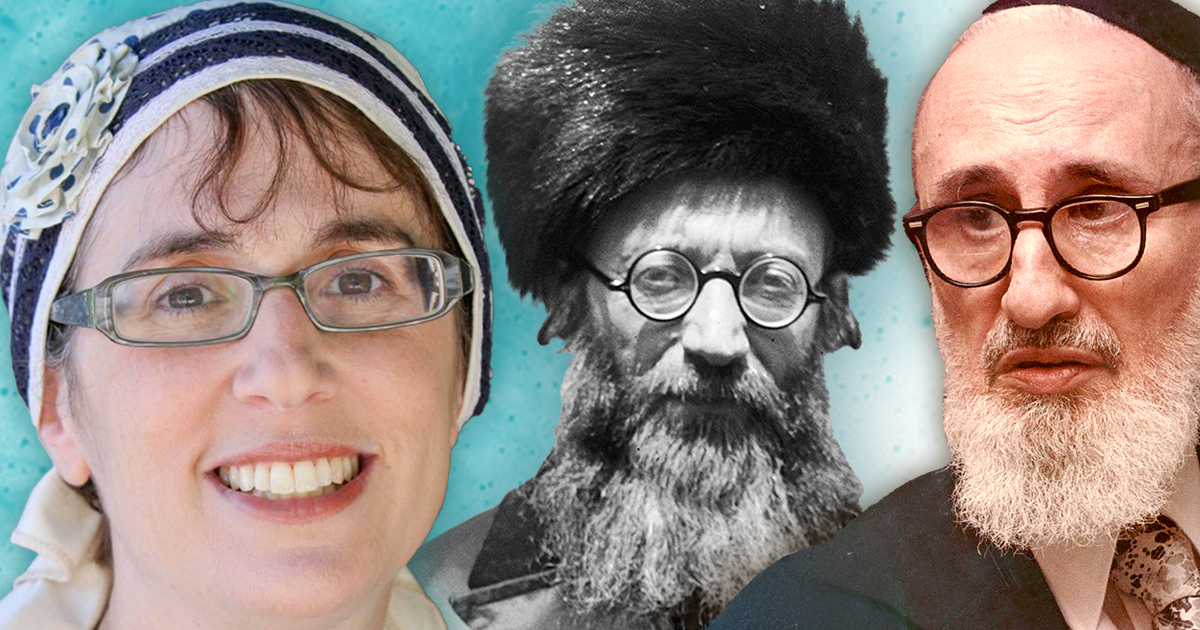 This course examines the lives, thought, and legacies of two of the most significant figures in modern Jewish intellectual history: Rav Abraham Isaac HaCohen Kook and Rav Joseph B. Soloveitchik. Through close study of their writings, students will engage with their deeply insightful explorations of the self in relation to God, the nature of Divine service, and the meaning of Jewish peoplehood. Each thinker responded to the defining challenges of his age: Rav Kook shaped the spiritual and ideological foundations of nascent Israeli society and the Zionist project, while Rav Soloveitchik gave meaning and direction to post-Holocaust American Judaism. Together, they represent two profound encounters with modernity, and provide enduring visions of Judaism in the modern world.
MACHSHAVA SUGYOT COURSES
Students must complete at least one of the following courses. Each Machshava Sugya course will last 12 weeks, with each weekly lesson lasting an hour.
Ikkarei HaEmunah (Fundamentals of Faith)
Taught by Rabbi Dr. Mark Smilowitz – JANUARY 2026 – Available via recorded archives
 This course explores Jewish principles of faith, focusing on Maimonides’ thirteen principles, the theory behind them, and their meaning and applicability in normative Judaism. We will ask: What are the origin and function of these principles? How central are they to Jewish identity? Is Judaism defined more by belief or by practice? How do we draw the line between what is fixed and what is flexible in normative Jewish belief? And how should we relate to Jews, past and present, who have diverged from these principles?
Hashgacha Pratit (Divine Providence) & Bitachon (Trust in God)
Taught by Rabbi Johnny Solomon – STARTS October 2027
 This course will explore the various positions of Jewish thinkers about the meaning and scope of Divine Providence, and how these different approaches regarding the extent of God’s intervention in our life impact how we live with trust in God.
Holocaust & Zionism
Taught by TBA – STARTS October 2027
This course will examine a range of perspectives offered by Modern Jewish Thinkers about the theological significance of the Modern Zionism and the relationship between the Holocaust and the founding of the State of Israel.
FOR MORE INFORMATION ABOUT THE MACHSHAVA MASTERY PROGRAM CLICK HERE
TO APPLY PLEASE CLICK HERE.
*Courses, times, and course details are subject to change.