
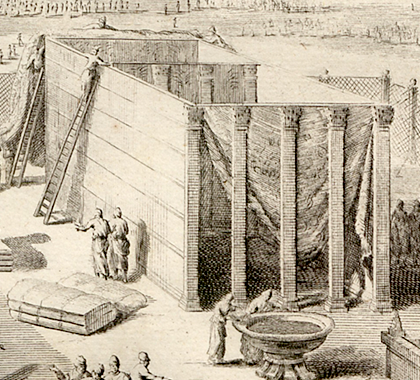
In this week’s parsha, the Ma’or VaShemesh teaches that the final stage of the Mishkan’s inauguration could not be completed by Moshe, but rather specifically by Aharon.
The Mishkan itself is a response to the Golden Calf, a process of repair that must pass through the failure, not bypass it. Moshe, who stood outside the sin, could build the structure, but he could not complete the required rectification. That required Aharon, who was part of the moment and could now transform it.
Teshuvah is not about erasing the past, but transforming it. The same act, the same material, now directed toward holiness.
Aharon takes on greater responsibility, holding himself to a higher standard, while the people are not defined by their failure and are able to step forward on their own, “vayikrevu kol ha’edah.”
The Shechinah descends not when the work is finished, but when accountability is shared.
Be strict with yourself, and generous with others. That is how something broken becomes whole.
Use this source sheet, complete with footnoted sources and a concise, footnoted bio of R. Kalonymus Kalman Epstein (Ma’or Va-Shemesh) to enjoy this teaching at your own pace, perfect for self-learners.
Prepared by Rabbi Shalom (Saul) Orbach
The Ma’or Va-Shemesh is a classic Hasidic commentary on the weekly portions and festivals by R. Kalonymus Kalman Epstein of Kraków (1751-1823). A foremost later disciple, and for years the Shamash, of R. Elimelech of Lizhensk, he emerged after his rebbe’s passing as a leading figure in the fourth generation of Chassidut and of Polish Hasidism. His Torah blends close reading of the Psukim with mystical depth, emphasizing Dvekut, heartfelt prayer, joy, and sanctifying the everyday, with a hallmark leadership ethic: the tzaddik sweetens judgment into mercy and draws people close.