
How to learn Torah
In this week’s Parsha, the Maor VaShemesh teaches that “Ve’eleh HaMishpatim” is not only telling us that the laws were given at Sinai, it is teaching us how to learn Torah. Just as the Aseret HaDibrot were given B’Eimah U’v’Yirah, B’Retet U’v’Zi’ah, with awe and fear, with trembling and shaking, so too every part of Torah, including the Mishpatim, must be learned that way.
Teshuva as the catalyst
Rashi says that “Ve’eleh Mosif Al HaRishonim,” meaning these add to the former ones. The Maor VaShemesh explains that what is being added is this demand: that the Mishpatim too must be learned as they were given at Sinai, in the same way, B’Eimah U’v’Yirah, B’Retet U’v’Zi’ah. Teshuvah is the preparation that enables a person to reach that kind of learning, rather than learning as a commandment performed by rote.
Placing Parshat Mishpatim next to the Mizbeach, which represents the Korbanot of earlier generations and the Tefillah that stands in their place today, teaches that just as Avodah is done B’Eimah U’v’Yirah, B’Retet U’v’Zi’ah, and requires Teshuvah beforehand, so too Limud HaTorah must be approached with awe, fear, trembling, and shaking, with Teshuvah preceding it.
Sinai was not only where Torah was given. It is also how Torah must always be learned.
Parshat Shkalim:
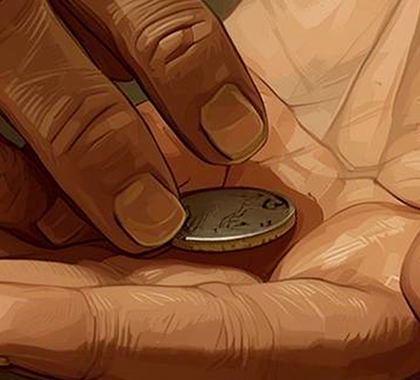
The Maor vaShemesh on Parashat Shekalim, he asks: What does Machatzit ha-Shekel mean for us now, in galut, without a Beit HaMikdash?
He explains that Hashem created the world in order to bestow good upon His creatures. But within creation there is a built-in tension between Rachamim and Din. The name Elokim represents the Gevurot, the side of judgment that can manifest as what appears to us as teva. Hashem’s desire is not Din, but that we live in awareness of Him.
Rachamim as a sweetener
When we fail to recognize Hashem as Creator and One Who supervises all, above and below, and reduce everything to “nature,” as Paro and Haman did, we strengthen the Gevurot and empower Din. But when we do Teshuvah and serve Hashem through Mitzvot, strengthening Sechel over Chomer, we draw illumination from Shem Havayah, the midah of Rachamim. The Rachamim overpower the Gevurot, sweeten them at their root, and include them within the Chasadim.
The shekel and din
Within that framework, Machatzit ha-Shekel becomes clear. The Shekel, through gematria, corresponds to the measure of Din, and it must not stand whole. By giving only a half-Shekel, we symbolically diminish and weaken the Gevurot. Through Teshuvah and Avodat Hashem, the Dinim are sweetened and Rachamim prevail.
That is why Ba-echad b’Adar Mashmi’in al ha-Shekalim. It is an annual awakening in this spiritual struggle. And that is why Hashem says to Haman, Kvar Kadmu Shiklei Banai l’Shkalekha. The Shekalim of Israel precede and weaken the harsh decree.
Even in galut, the Avodah of Shekalim remains eternal.
Use this source sheet, and this one for Shekalim, complete with footnoted sources and a concise, footnoted bio of R. Kalonymus Kalman Epstein (Ma’or Va-Shemesh) to enjoy this teaching at your own pace, perfect for self-learners.
Prepared by Rabbi Shalom (Saul) Orbach
The Ma’or Va-Shemesh is a classic Hasidic commentary on the weekly portions and festivals by R. Kalonymus Kalman Epstein of Kraków (1751-1823). A foremost later disciple, and for years the Shamash, of R. Elimelech of Lizhensk, he emerged after his rebbe’s passing as a leading figure in the fourth generation of Chassidut and of Polish Hasidism. His Torah blends close reading of the Psukim with mystical depth, emphasizing Dvekut, heartfelt prayer, joy, and sanctifying the everyday, with a hallmark leadership ethic: the tzaddik sweetens judgment into mercy and draws people close.