
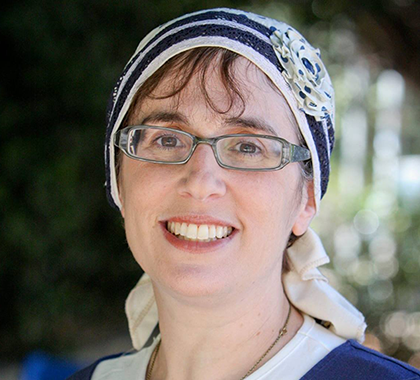
For over 50 years has taught thousands of students from all around the world. This week we introduce you to Ilana Goldstein Saks. She has taught Tanach for many years and is also a professional baker. Ilana is currently a coordinator of the special-needs bakery at Sadnat Shiluv. She lives in Efrat with her husband, Rabbi Jeffrey Saks, and their four children.
The WebYeshiva Blog


Mar 06, 2022
Rabbi Brovender Legacy Interview: Rabbi Shlomo Katz
For over 50 years has taught thousands of students from all around the world. This week we introduce you to Rabbi Shlomo Katz. Born in New Jersey and having grown up between Los Angeles and Ra’anana, Rav Shlomo has released eight studio albums and toured the world playing music and teaching Torah. He is the spiritual leader of the Shirat David Community of Efrat, Israel, where he lives with his wife, Binah, and their five children.
How did you meet Rabbi Brovender?
When I was 22 and living in Los Angeles, I was looking for a place to learn for smicha, and joined Yeshivat Hamivtar in the summer of 2002. Aside from establishing a family, it was the wisest decision of my life. When I first showed up at yeshiva, I thought Rabbi Brovender would only be interested in talking about learning. After our first meeting, it became clear that he wasn’t just interested in where I wanted to go in life, but also where I came from. It gave me a sense that even though Hamivtar was not the touchy/feely environment I may have been used to in other circles, the genuine and sincere care for my well-being, based on where I was coming from, was top priority.
What do you find most important or striking about the "Brovender Method" - his unique way of teaching?
What has always struck me the most is Rabbi Brovender’s belief and trust in the power of the Torah. It was always clear how much Rabbi Brovender believed enough that when bringing the Torah to us, the Torah itself would take it from there.When it comes to Torah learning, what were you most drawn to after learning with Rabbi Brovender?
Rabbi Brovender’s shiurim on Parsha have been most influential. The manner in which Rashi and the Ramban were taught, and tying it to the approach of the chassidic masters is a limmud I never experienced the likes of from anyone else. There was one shiur on Parshas Masei, where Rabbi Brovender taught us a piece from the Sfas Emes. This piece, which spoke about the two and a half shvatim who settled on the other side of the Yarden, could only be understood by explaining Rashi and Ramban. It was only because of the way Rabbi Brovender gave over Rashi and the Ramban that the door to understanding the Sfas Emes was opened for us.What lesson or specific Torah that you learned from Rabbi Brovender, do you keep coming back to or carry with you wherever you go?
Rabbi Brovender’s interest in a person’s background, as well as their current state of being, wrapped in a connection with Talmud Torah is a lesson I try to carry with me forever. As a community rabbi, the privilege of establishing a personal connection, as well as having a Torah relationship with a community member, is something that I attribute to Rabbi Brovender. There was a statement Rabbi Brovedner would often make when learning Rashi, whether it was a Rashi in the Gemara or in Chumash, and it went something like this: “What does Rashi mean? There’s two answers. A) I don’t know. B) I still don’t know, but I’m going to try and do my best to understand.” This approach has had a very strong impact on me, as I feel that this is greatly lacking in the learning world. At its core is the notion of approaching learning Torah with humility. However, this lesson is not only applicable in the arena of learning text, but it’s the same regarding people. Giving it our best shot, with anava, humility at its core, is the best we can do.

Feb 20, 2022
Rabbi Brovender Legacy Interview: Rabbi Ian Pear
For over 50 years Rabbi Brovender has taught thousands of students from all around the world. This week we introduce you to Rabbi Ian Pear. Almost 20 years ago Rabbi Pear founded Shir Hadash, an educational institute dedicated to bringing Jews closer to Judaism and one another, and promoting a love of Israel amongst all people. Shir Hadash has several locations including its main branch in Jerusalem’s Talbiya neighborhood and a Shabbat Satellite Minyan in Jerusalem’s German Colony.
Shir Hadash also operates an Early Childhood Center, an Educational Farm in the North of Israel, and most recently, Amudim, a Midrasha for overseas students visiting Israel for the year. Rabbi Pear has authored several books including the best seller The Accidental Zionist. He lives in Jerusalem with his wife, Rachel, and five children.
How did you meet Rabbi Brovender?
I knew of Rabbi Brovender first only by reputation. But it was a reputation that made me want more. I was in California at the time and asked around about where I could simultaneously really improve my learning skills as well as learn more about traditional Judaism in general, and every person I trusted said the same place and the same man’s name. So the next year I came to Yeshivat Hamivtar for a year, entered the beginner level shiur, and worked as hard as I could so I could move up and eventually understand enough to be in Rabbi Brovender's shiur.What do you find most important or striking about the "Brovender Method" - his unique way of teaching?
He is not an ideologue, not interested in kiruv, and not a preacher. He was not interested in having students who thought he was great (though we did). Rather, he was solely focused on giving us the tools so we could access Jewish texts in the most authentic way possible, and those tools, in turn, enabled us to enrich our own lives on our own terms. He let Judaism speak for itself rather than serving as its publicist. This required a lot more work on his student's behalf -- and his model encouraged the investment needed to succeed -- but in the end it has proven far more rewarding and long-lasting than I could have ever expected.When it comes to Torah learning, what were you most drawn to after learning with Rabbi Brovender
While I can never read another Rashi without asking a myriad of questions -- why did he say this? Why didn't he say that? What is Rashi really teaching us? -- his teaching of Rambam most whet my appetite for further learning.What lesson or specific Torah that you learned from Rabbi Brovender, do you keep coming back to or carry with you wherever you go?
The deepest Torah lesson I take with me from Rabbi Brovender is the importance of Torah study itself. Torah study requires constant vigilance, and if you allow the numerous distractions we are all confronted with get in the way, one will miss out on his learning. You won't become a talmudic master -- or for that matter, even a competent Jew -- without staying focused and dedicated to your learning. Always learn. Always grow. Otherwise you're going backwards.
Feb 06, 2022
Rabbi Brovender Legacy Interview: Mali Brofsky
For over 50 years Rabbi Brovender has taught thousands of students from all around the world. This week we introduce you to Mrs. Mali Brofsky. Mali has held numerous academic and administrative positions at educational institutions in Jerusalem, most recently at Michlelet Mevaseret Yerushalyim, and is currently serving as a field advisor for Yeshiva University's Wurzweiler School of Social Work's MSW program in Israel.
She holds a Masters in Jewish Philosophy from Bernard Revel Graduate School and an MSW from Wurzweiler, and runs a clinical practice in Gush Etzion. She lives in Alon Shvut with her husband and four children.
How did you meet Rabbi Brovender?
I met Rabbi Brovender during my shana ba’aretz at Midreshet Lindenbaum, and was privileged to keep learning from him and being influenced by his singular personality and leadership during my years in the Bruriah scholars program.
What do you find most important or striking about the "Brovender Method" - his unique way of teaching?
I think the most important lesson that stays with me is Rabbi Brovender’s integrity and honesty, which comes through both in his personality, and in his style and method of teaching Torah. Rabbi Brovender always cuts through to the heart of the matter – zoning in on what is crucial, so that you are left with a sense of clarity about not only the topic you were learning, but also the underlying moral messages and imperatives inherent in whatever topic he is teaching.When it comes to Torah learning, what were you most drawn to after learning with Rabbi Brovender?
I don’t think I was left drawn to a specific field of Talmud Torah; on the contrary, I think that learning from Rabbi Brovender left me inspired about the richness of all Talmud Torah, from Gemara and Torah she-be'al Peh, to Tanach, to machshava, or any other field of Talmud Torah. That is part of his message and his gift – it’s all Torah in his eyes, and everything that is Torah should be learned. This message was obvious to Rabbi Brovender, and was delivered with no frills, but rather lived and taught as self evident.What lesson or specific Torah that you learned from Rabbi Brovender, do you keep coming back to or carry with you wherever you go?
One which is so obvious that I’m hardly even conscious of it any more, was his approach to women and Talmud Torah. It was clear to Rabbi Brovender that aside from questions about formal obligation in learning certain areas of Torah study, if that study was conducive to the formation of the religious personality and facilitated greater connection to God, it was obvious that that study should be actively encouraged and pursued. This idea has become so integral to my perspective that I hardly think about it as a “lesson” anymore, but the truth is that the first person who articulated it to me was Rabbi Brovender, and I will never forget the moment and the shiur in which I heard it from him. Another strong memory I have is Rabbi Brovender passionately defending the idea that we have to look to the Avot as heroes and role models - if we do not have this perspective, he argued, what exactly is the point of studying their lives? This orientation toward searching for values and meaning in Torah study, and the perception that when we learn, we are mining our tradition for the timeless treasures of the principles inherent within it, has stayed with me as a fundamental truth.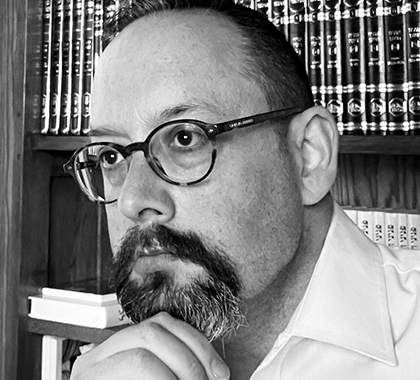
Jan 23, 2022
Rabbi Brovender Legacy Interview: Rabbi Josh Ross
For over 50 years Rabbi Brovender has taught thousands of students from all around the world. This week we introduce you to Rabbi Josh Ross. After receiving an advanced double BA in History and Philosophy from Dalhousie University (Canada), Rabbi Ross spent eight years learning at Yeshivat Hamivtar. Upon returning to North America with his wife Rivky and their children he worked as a campus rabbi for the Orthodox Union’s Jewish Learning Initiative on Campus. The Ross family spent three years at Cornell and three years at Princeton and Josh is currently the OU-JLIC’s Deputy Director. In his spare time Rabbi Ross is a powerlifter and strength and conditioning coach.
[caption id="attachment_75631" align="alignright" width="300"] Rabbi Brovender (right) celebrating at the wedding of Rabbi Ross (front left).[/caption]
