
Parshat Behar
In Parshat Behar, the Ma’or Va-Shemesh reframes shemittah (the sabbatical year) as something much deeper than an agricultural mitzvah.
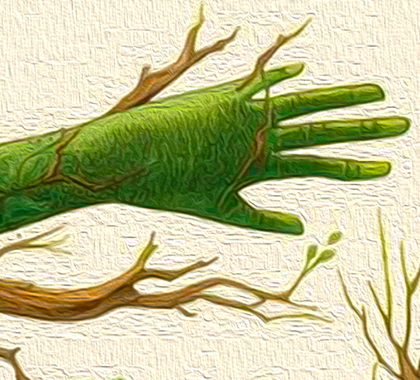
He begins with a striking idea. The land itself committed a chet ha’aretz (a “sin of the land”) at creation, changing its role, but did so leshem shamayim (for the sake of Heaven), so that when adam (man) would later fall, he would not stand alone. From that moment on, adam and adamah (man and land) are bound together.
But the תיקון (tikkun=repair) does not start with the land. The Ma’or Va-Shemesh is clear: the hizdakchut (refinement) of the land is teluyah b’hizdakchut ha’adam (dependent on the refinement of the person). The land responds, it does not initiate.
That is what shemittah reveals. If the six years are lived properly, if a person works leshem shamayim, not for accumulation but for avodat Hashem, then something shifts. The land itself becomes refined and returns to its original state, giving without effort in the seventh year. Not as a supernatural override, but as a restoration of what the world was meant to be.
And if not? Then the shefa (divine abundance) still comes, but through a different system, not as the natural result of alignment, but as an act of chesed (divine kindness).
Shemittah, then, is not just rest. It is a window into how the world is meant to function, a world in which adam and adamah rise together. The only question is whether we live in a way that allows that to happen.
Parshat Bechukotai
In Parshat Bechukotai, the Ma’or Va-Shemesh takes the idea that what we receive is shaped not just by what we do, but by the orientation behind it, and grounds it in Rashi’s explanation of “אם בחוקותי תלכו” (im bechukotai telechu — “if you walk in My statutes”).
Rashi explains this as שתהיו עמלים בתורה (she’tihyu ameilim baTorah — that you should toil in Torah). But the Ma’or Va-Shemesh notices something simple and precise. The pasuk says “תלכו” (telechu — “you will walk”), not “you will learn.”
It’s describing how a person walks through life.
A person inevitably engages in melachah (work). The question is not whether we work, but what that work is for.
If one’s amal (effort), even in melachah, is directed leshem shamayim (for the sake of Heaven), to support a life of Torah and avodah (service of Hashem), then that work is not separate. It becomes part of ameilut baTorah (toiling in Torah). The same actions, but now part of one integrated system.
And in that kind of life, berachah (blessing) and shalom (peace) emerge, not only externally, but within the person, a life without kin’ah (jealousy) and without machloket (conflict).
But if the work stands on its own, if it becomes about accumulation or desire, then even though nothing has changed on the surface, the direction is entirely different. That path leads toward kin’ah, and from there to machloket.
Externally, it looks the same. But internally, it’s not the same life at all.
The Ma’or Va-Shemesh leaves us with a sharp question: Is what we’re doing just work, or is everything we’re doing part of ameilim baTorah?
Shabbat Shalom.
Use this source sheet for Parshat Behar and this source sheet for Parshat Bechukotai, complete with footnoted sources and a concise, footnoted bio of R. Kalonymus Kalman Epstein (Ma’or Va-Shemesh) to enjoy this teaching at your own pace, perfect for self-learners.
Prepared by Rabbi Shalom (Saul) Orbach
The Ma’or Va-Shemesh is a classic Hasidic commentary on the weekly portions and festivals by R. Kalonymus Kalman Epstein of Kraków (1751-1823). A foremost later disciple, and for years the Shamash, of R. Elimelech of Lizhensk, he emerged after his rebbe’s passing as a leading figure in the fourth generation of Chassidut and of Polish Hasidism. His Torah blends close reading of the Psukim with mystical depth, emphasizing Dvekut, heartfelt prayer, joy, and sanctifying the everyday, with a hallmark leadership ethic: the tzaddik sweetens judgment into mercy and draws people close.