
Mikveh Mechanics
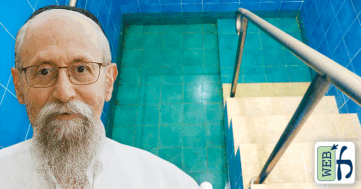
THIS IS A WEBYESHIVA.ORG HALACHA MASTERY PROGRAM COURSE, OPEN TO ALL WEBYESHIVA.ORG STUDENTS. Participants who are not already members of the WebYeshiva.org Halacha Mastery Program are asked to please submit a $50 donation for this course:
Mikveh Mechanics: Lesson 1 – זחילה
Our first class will deal with flowing water (as from a spring) and stationary water (as in a mikve).
Both are acceptable for immersion. Therefore both must be carefully defined.
When, exactly, is flowing water acceptable?
What defines stationary water?
A source sheet in both WORD format and pdf is available through the links. In class we will translate and explain these sources.
Mikveh Mechanics: Lesson 2 – השקה
Today we finish the topic of water in motion (זוחלין) and stationary water (אשבורן) and begin to learn the rules governing the method of filling a man-made mikve with water.
Source sheets are available through the links as usual.
Mikveh Mechanics: Lesson 3 – המשכה
המשכה – Flowing water is invalid if it is spilled or poured into a mikve; but not if it flows
indirectly into the mikve.
Using snow or ice to fill a mikve.
Mikveh Mechanics: Lesson 4 – שלג וקרח מלאכותי
Miva’ot are typically built with two pools, one with rain water and one with pumped water. The two pools are connected by means of hashaka (a pipe with ⌀ > 5 cm).
Immersion takes place in the pool with pumped water, which can be regularly drained, cleaned, and refilled.
Should the pool of rain water be next to the immersion pool with the two connected by hashaka?
Or should the pool of rain water be underneath the immersion pool with a hole in the floor of the immersion pool to connect it with the rain water?

In addition to being one of Rabbi Brovender's first students, Rabbi Dovid Fink is an outstanding expertᅠand teacher of Halacha. Rabbi Fink received his Rabbinic ordination from ITRI and the Mir and was awarded his Ph.D in Semitic Languages and Linguistics from Yale University. Rav Fink has taught thousands of students from all over the world for over 35 years.