
Jewish Leap Years
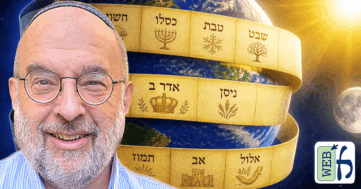
Join Rabbi Dr. Stuart Fischman as he explores the fascinating challenge at the heart of the Jewish calendar: how do you reconcile the lunar and solar years? The Torah emphasizes the months according to the moon, yet Pesach must fall in the spring, which is governed by the sun. Discover how the Jewish system of leap years brings these two cycles together and preserves the rhythm of the Jewish year.
Jewish Leap Years: Jewish Leap Years
Hello Everyone,
Welcome to these two sessions on “ Jewish Leap Years.” Many cultures have “leap years” so in today’s meeting we will talk about calendars in general and why leap years have come to be seen as necessary. After this introduction we will talk about the Jewish calendar and our system for determining the occurrence of leap years.
Our calendar is one of the strongest bonds that hold our people together. Jews all over the world, in all denominations use the same calendar. And all the Jews , all over the world, agree that this year (5787) is a leap year.
I look forward to learning with you this evening.
Jewish Leap Years: Jewish Leap Years
Hello Everyone,
Welcome to the second session discussing the Jewish leap year. In the Jewish leap year system, an extra month is added seven times every nineteen years. The added month comes at the end of the calendar year; that is to say that in leap year there are two months with the name “Adar.” The question which arises from these lap years is which of the two months named Adar, is the “real” Adar? For example, the holiday of Purim is celebrated on the fourteenth day of the month of Adar. On a leap year is Purim celebrated in the first or the second Adar? If a girl or boy is born in a regular year ( with one Adar) but their bat/bar mitzvah years come out in a leap year, on which Adar do they celebrate their bat/bar mitzvah?
These questions vexed the sages throughout the years and today we will see how the questions were answered.
Rabbi Dr. Stuart Fischman graduated from Yeshiva University in 1980 and the dental school of Columbia University in 1985. In 1989 he began studying and teaching at Yeshivat Hamivtar and now studies and teaches at Yeshivat Machanaim in Efrat. He has rabbinic ordination from Rav Zalman Nechemia Goldberg.