
Hasidic Dynasties in Crisis
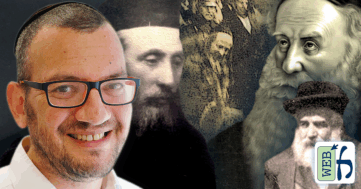
Join Rabbi David Sedley as he traces seven Hasidic dynasties through the moments when they were tested hardest — a leadership vacuum, an ideological rupture, or a rebbe whose choices put him at odds with his own community — and uses each crisis as a window into what that dynasty actually believes.

 Timezone
 Time of Class
October 13, 2026 7:00 pm - 8:00 pm
Hasidic Dynasties in Crisis: Introduction: Two Jewish Models of Transferring Leadership
Hasidic Dynasties in Crisis: Introduction: Two Jewish Models of Transferring Leadership
Class description
This class serves as an introduction to the entire series and discusses different models of transferring leadership from one generation to the next. One model is that of Moshe handing over learership to Yehoshua, his foremost student. This was the primary way for religious leadership, with a rabbi giving semicha to the students of the next generation. In contrast, there is the model of kings and priests — Aharon’s son Elazar inherited his role as Cohen Gadol, and only King David’s descendants were eligible to be king.
When it comes to chasidic leadership, initially it was the students of the Baal Shem Tov who succeeded him. However, gradually, it became accepted, for political and religious reasons, that the position of Rebbe could only pass down to someone with a biological connection. Rav Shneur Zalman of Liadi’s main work, the Tanya’, which became the foundation of chasidic theology, clearly states that a tzadik has a different type of soul than everyone else, and only someone born to the role can attain that position of leadership.
October 20, 2026 7:00 pm - 8:00 pm
Hasidic Dynasties in Crisis: Hasidic Dynasties in Crisis
Hasidic Dynasties in Crisis: Hasidic Dynasties in Crisis
Class description
October 27, 2026 8:00 pm - 9:00 pm
Hasidic Dynasties in Crisis: Hasidic Dynasties in Crisis
Hasidic Dynasties in Crisis: Hasidic Dynasties in Crisis
Class description
November 3, 2026 8:00 pm - 9:00 pm
Hasidic Dynasties in Crisis: Hasidic Dynasties in Crisis
Hasidic Dynasties in Crisis: Hasidic Dynasties in Crisis
Class description
November 10, 2026 8:00 pm - 9:00 pm
Hasidic Dynasties in Crisis: Hasidic Dynasties in Crisis
Hasidic Dynasties in Crisis: Hasidic Dynasties in Crisis
Class description
November 17, 2026 8:00 pm - 9:00 pm
Hasidic Dynasties in Crisis: Hasidic Dynasties in Crisis
Hasidic Dynasties in Crisis: Hasidic Dynasties in Crisis
Class description
November 24, 2026 8:00 pm - 9:00 pm
Hasidic Dynasties in Crisis: Hasidic Dynasties in Crisis
Hasidic Dynasties in Crisis: Hasidic Dynasties in Crisis
Class description
December 1, 2026 8:00 pm - 9:00 pm
Hasidic Dynasties in Crisis: Hasidic Dynasties in Crisis
Hasidic Dynasties in Crisis: Hasidic Dynasties in Crisis
Class description

Rabbi David Sedley lives in Jerusalem with his wife and six children. He was born and raised in New Zealand before coming to Israel in 1989. He left Israel temporarily (for eight years) to serve as a communal Rabbi in Scotland and England and returned to Israel in 2004. His latest book is "The Elephant of Deliberate Forgetfulness: and other unexpected interpretations of the weekly Torah reading". He has also translated Rabbeinu Yonah's commentary on Pirkei Avos and is the co-author of Sefiros: Spiritual Refinement Through Counting the Omer (both Judaica Press). Over the years Rabbi Sedley has worked as a journalist, a translator, a video director and in online reputation management. He also writes a weekly Torah blog on the Times of Israel.